


13th March - Is it a conductor?
At the start of our science lesson, we made predictions about which materials we thought would conduct electricity and which would insulate electricity. We talked about our ideas and explained why we thought certain materials would work in a circuit.
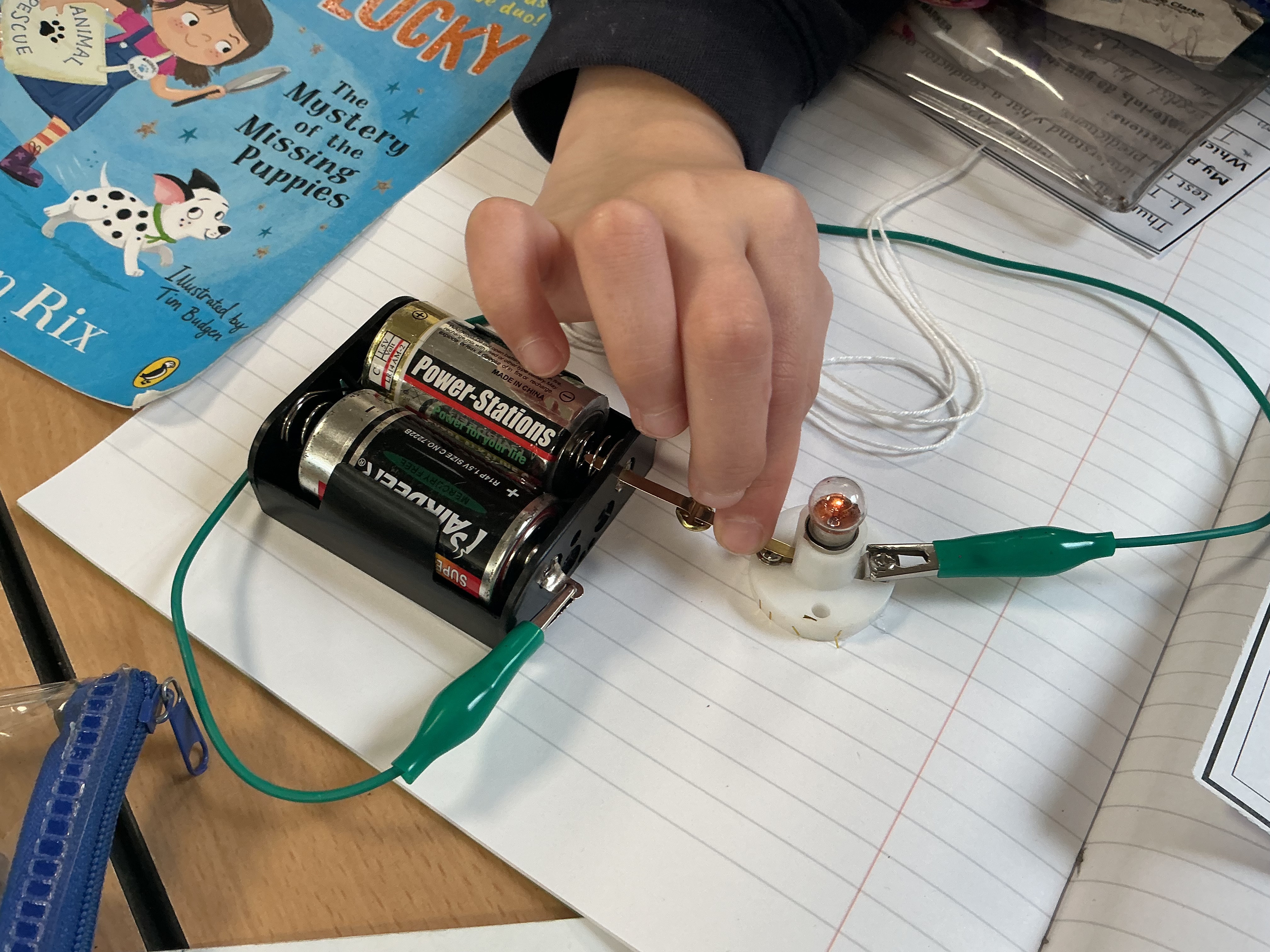
First, we learned about electric circuits. We discussed the difference between an open circuit and a closed circuit. A closed circuit is when the electricity has a complete path to travel around, which makes the bulb light up. An open circuit is when there is a gap in the circuit, so the electricity cannot flow and the bulb stays off.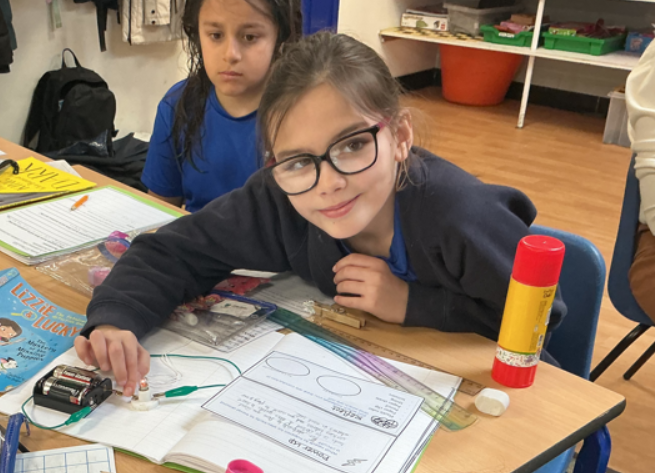
Next, we carried out an experiment. Instead of using a wire in our circuit, we tested different materials to see if they were conductors or insulators.
We used a simple circuit with a battery, wires and a bulb. Then we placed different objects into the gap in the circuit to see if the bulb would light up. If the bulb lit up, the material was a conductor because electricity could pass through it. If the bulb stayed off, the material was an insulator because it stopped the electricity from flowing.
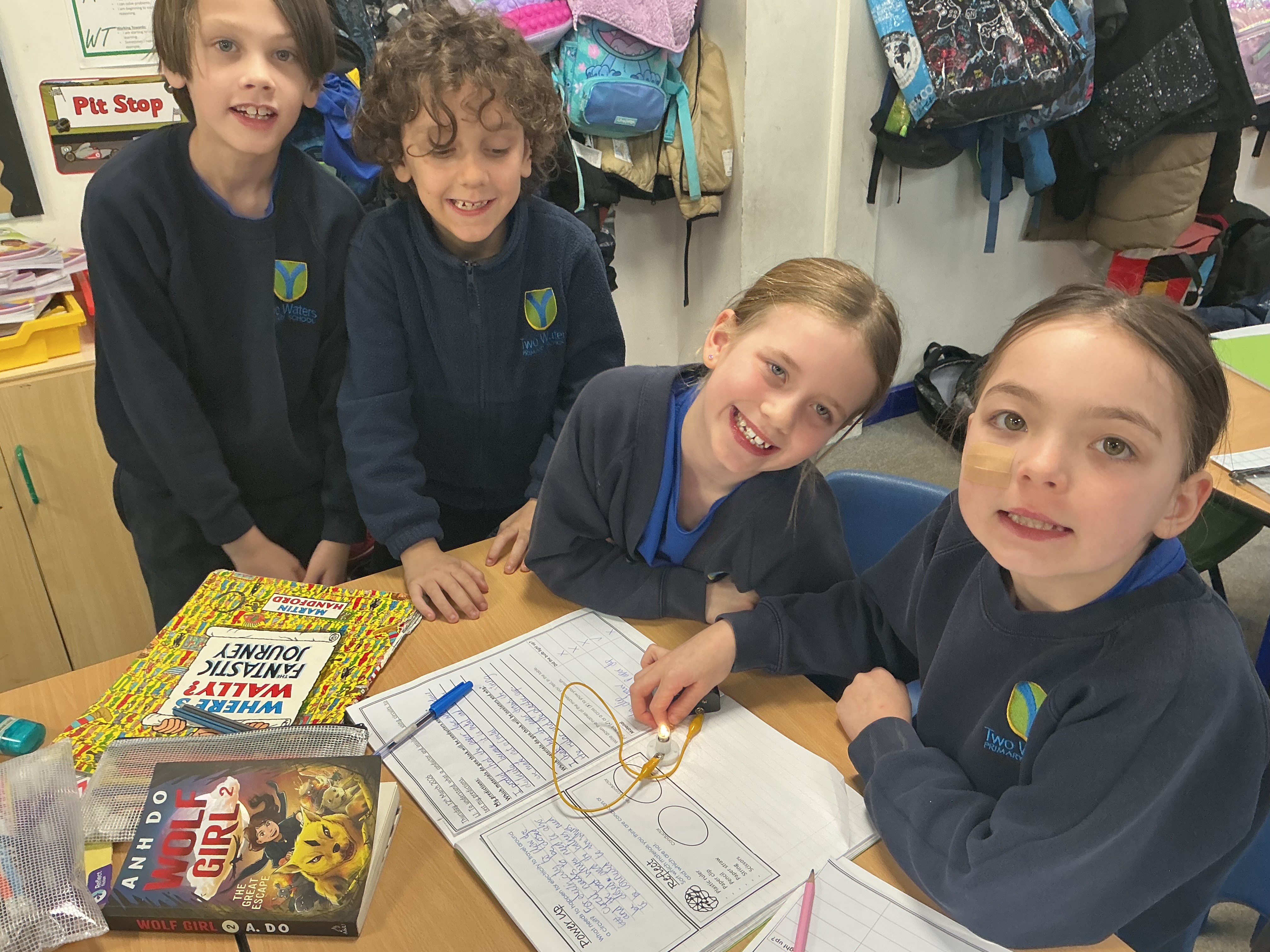
We tested many objects, including paper clips, split pins, string, wooden rulers, plastic rulers, scissors and paper straws. We discovered that many metal objects, like paper clips, split pins and scissors, were conductors because the bulb lit up. Materials like string, plastic rulers, wooden rulers and paper straws were insulators because the bulb did not light.
